Star Wars Knights of the Old Republic 3 is the cancelled third chapter in the popular RPG series developed by BioWare and published by LucasArts. The project was started by LucasArts in 2003 / 2004 when they canned another Star Wars MMO for console named “Proteus” and planned to reuse the same team and part of the already created designs to develop a new KotOR game. Unfortunately KotOR 3 followed the same fate and they later decided to cancel the project because of LucasArts’ financial problems, when the management did not want to invest money and time in such an expensive game.
A few KotOR 3 concept arts created during the design phase were leaked online and we can see new robots (Q-10), spaceships (Dashaad Fighter, Sith Troop Transport, Coruscant Vehicle) and characters. Some more details on KotOR 3 were published in 2008 in the book “Rogue Leaders: The Story of LucasArts”, in which they revealed that one of the new characters was a woman named “Naresha”.
“Upon the cancellation of the Proteus project, team and elements of the designs were applied to Star Wars: Knights of the Old Republic 3, which, according to designer John Stallford, “got quite a bit of traction… we wrote a story, designed most of the environments/worlds, and many of the quests, characters, and items.” However, this new game direction fell victim to LucasArts hitting possibly the most difficult period in the company’s history.”
We can only hope that one day someone could share more artworks and info from the early development of KotOR 3.
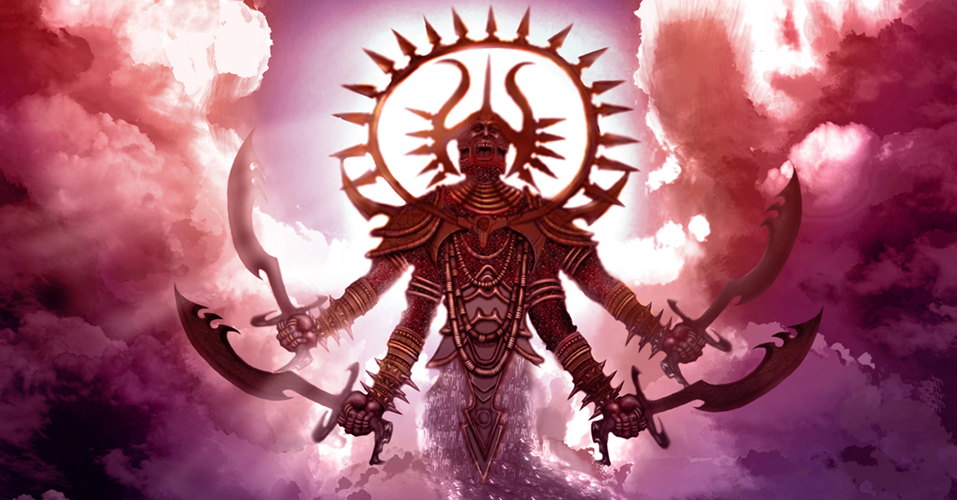
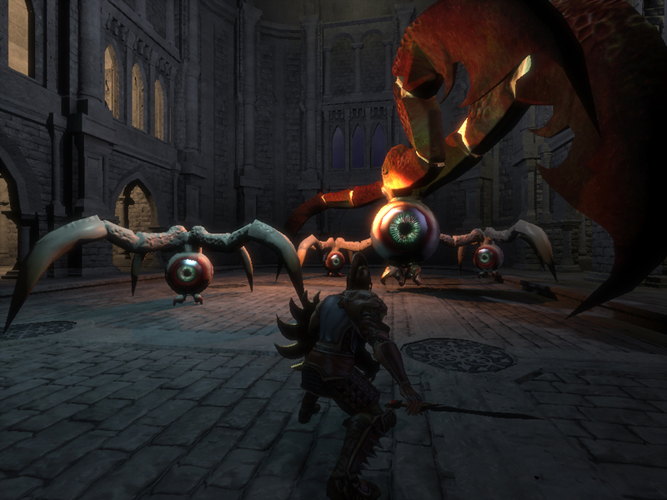
Djinn is a cancelled action RPG planned initially for PC and later also for Xbox 360 and Playstation 3. The project was in development by Castaway Entertainment, a talented team founded in 2003 by former developers who left Blizzard North, some of which were previously working on the cancelled version of Diablo 3. Djinn was quite hyped at the time because of its connection with the Diablo series and many RPG fans were eager to see more from the game, promising hundreds of hours of adventure, exploration and rare loot. Unfortunately before its cancellation not much was ever revealed about Djinn, its gameplay mechanics or plot, but thanks to the finding of its pitch document we can now learn more about this ambitious project.
Castaway wanted to create an innovative role playing game with a story told in real time, while players were actively exploring its world and listening to the protagonist’s comrates. This team of characters following the protagonist could have been similar to the “pawn” system used many years later in Dragon’s Dogma, but with heavy interconnections with the main storyline:
“The idea of a next-generation, greatly upgraded Diablo II on console forms the basis of the concept and marketing strategy for our newest game, Djinn. Djinn is a real-time 3D action roleplaying game of heroic risks in an island world of ancient mythical beings and forbidden magic. With non-stop pacing unfettered by text dialog choices, and featuring larger than life ruins, temples, and legendary creatures, Djinn reveals a real time story told not by signpost NPCs but by your very traveling companions”
“Our unique twist on companions is the Crew concept. The crew members are intriguing, multi-purpose characters who are also lesser heroes in their own right, much like the Argonauts (the Greek heroes who made up the crew of Jason’s ship Argo). They can be added or removed at any time to the questing party, and each one has unique powers that the player will enjoy experimenting with. In combination, crew members may reveal additional abilities.”
Djinn’s gameplay would have been inspired by many more games other than the popular Diablo 2, adding physics-based combat and environment interaction, plus a series of “cards” that could change the game’s world and how players could interact and fight in this world. We could imagine it as an ambitious mix between Psi-Ops, Phantom Dust, Baten Kaitos and Hand of Fate:
“Djinn combines Diablo II quality, item collection, tactical equipment and skill choices, and dynamic, user-friendly combat; Phantom Dust playfield interaction and destruction; Psi-Ops physics-based combat; Ratchet and Clank: Up Your Arsenal’s varied attacks and situational awareness; and Magic: The Gathering’s highly addictive collectible and customizable booster packs.”
“We will be showing off our combat moves, interactive environments and highly vertical levels using advanced physics. Players will be able to do many things with our physics engine, including: Push victims off ledges or slam them into spikes; Drop objects onto targets far below; Knock over pillars and break platforms, in order to damage opponents; Knock back enemies who fall down with rag doll physics; Create “domino” effects where one object knocks into another.”
“Djinn is designed to be a modular system that allows the player to make significant changes to their own game play experience. A player may alter their character’s skills, reconfigure their quests, select their companions, and even make changes to the world itself. These modifiers are contained in virtual “cards” that the player may collect, trade, buy, or sell with other players. “Cards” are currently being used as a metaphor for a system of tokens that can be applied within the game. The final game pieces will most likely take the form of artifacts or scrolls, not tarot or playing cards. Regardless of how the player wishes to manage their cards, everyone begins with a basic set (a virtual deck) that contains five types of cards: Skill Cards, Hero Cards, Quest Cards, World Cards, and Crew Cards. By playing combinations of these five types, the player is able to explore different locales over and over with very different experiences.”
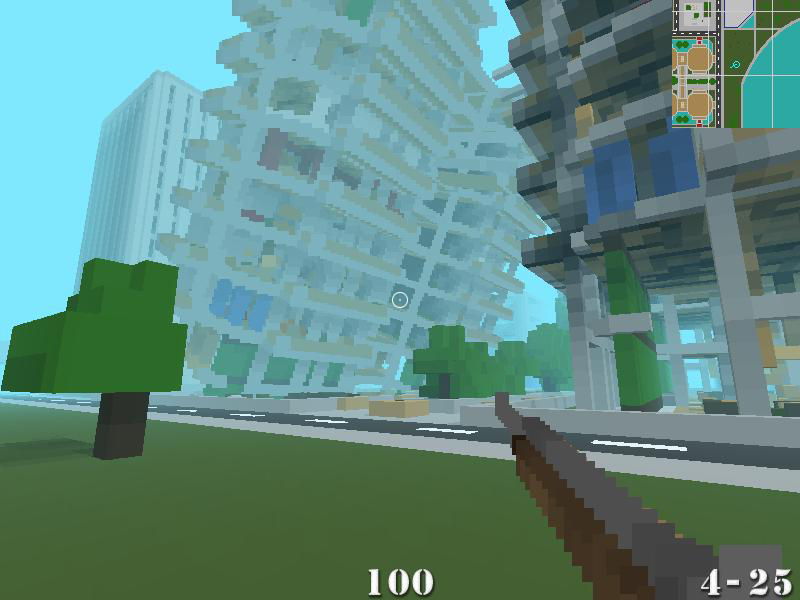
Ace of Spades was a voxel-based FPS first released in 2011. Advertised as ‘Minecraft meets Team Fortress 2‘, it was free to play, and took very little requirements to run (spawning the slogan ‘runs on your grandma’s rig!’). While earlier revisions of the game only had one weapon, some tools for construction, and randomly generated terrain it’s later versions had things such as different primary weapons (SMG, Rifle, and Shotgun), custom maps, and more. What separated Ace of Spades from your the more generic, ‘Minecraft-with-guns’ type shtick is that not only did Ace of Spades pre-date a good number of them, it’s mechanics led to genuinely tense trench warfare (I’d recommend watching early beta footage circa .75~) Ace of Spades slowly grew a community throughout it’s years, and it’s creator Ben Aksoy maintained a great relationship with his audience. Many of the forums were community-run, and since pretty much every single visual in the game could be easily modified there was also a huge modding scene. It hit 2 million downloads during it’s beta run, and won game of the month on MPOGD.
Jagex saw the game’s success fairly early on in the beta. They had their eyes on it, and finally approached Aksoy on purchasing the rights to the game. Aksoy was in a poor financial state at the time, and agreed with a catch; that Ben would be allowed to continue to stay involved with the project. Jagex agreed, but didn’t publicly announce their involvement until late 2012, when they really took control over development. Until then, they used a fake name to maintain the indie image (SoCa studios, which you will see at the bottom of the archived website).
The OpenGL build comes in here. It was established by one of the game’s original programmers, ‘Mat^2’ as the client for 1.0. It’s usage of OpenGL would be what separated the final versions to the open betas. When Jagex took over development, they decided to just take this build and used it as the basis for their version. According to a developer who worked on the JAGEX version of the game (may not seem verifiable, but I talked with a friend of Ben’s when I first researched this and they directed me to it) it was given to Blitz Games Studios to be completed. The developer did a Q&A on the Ace of Spades reddit, and revealed a lot of very pretty telling things about the development. The game had apparently been re-written in only 8 weeks, from November to December 2012. The game was not ‘professionally’ coded (spaghetti coding) and their goal was to appeal to a wider range of players vs the niche, original audiences.
Survive is a First Person shooter that started development as a simple game created in ray casting game maker. The game was planned for release only on pc and Linux. As development went on the game kept getting sequels until I was bored of Ray casting game maker and started to look for more powerful game engines. The new engine chosen was FPS Creator.
This version was created in late 2014 and was completed within a month. As a result this build was very buggy and crashed upon walking down a corridor. It was a corrupt video file in the game that needed to be removed for the game to work. The game was uploaded to mediafire in that same month and only got 20-30 Downloads. The video (Including the download) was removed a year after. After this the game started development again in a different game development software called Game Guru. This game was called Survive: What lurks Around. This version of the game was made after a line said by DR. Trugar in the Late 2014 build of the game in which he said “For what lurks around won’t be around for much longer”. Creating the game was easy and with help from my friend I managed to get the game off the ground. But this game never got that far and got canceled shortly after.
The game was once again reworked to make it more of a horror game. This is the build of the game that is still in work to this day in the FPS Creator Engine. You can download the early prototypes from here.
If we reminisce about the popularity musical games enjoyed roughly ten years ago, we cannot stress enough the role of Massachusets-based developer Harmonix Music Systems, creators of the popular Guitar Hero and Rock Band franchises. Of course, for those who have been in the videogame scene for some time, it is well known that other studios had delved in the music genre long before them. However, we cannot deny that Harmonix and by extension their distributors, first Red Octane and shortly afterwards Activision, were the first ones to appeal the interest of the US and European mass markets by filling up their titles with a wide selection of mainstream rock and pop music tracks. Where Konami’s Guitar Freaks had always remained a niche title, Harmonix established a new franchise that attracted both seasoned and casual players alike with its simple, yet progressively deep and challenging gameplay, greatly cementing videogames as a social experience to be enjoyed with groups of friends.
Harmonix’s existence has been closely tied to music and rhythm games and even after the hype surrounding Guitar Hero – not anymore in Harmonix’s hands after three titles – and Rock Band faded away, the developer kept experimenting with the concept of music applied to other genres. Given the massive popularity of the first person shooting genre, it must have been a quite logical leap to combine both concepts, giving birth to the initial idea of Chroma.
First announced on the seventeenth of February 2014, Chroma constituted a collaboration between two developer teams: Harmonix itself, bringing their expertise in musical games and Hidden Path Entertainment, known for Counter-Strike: Global Offensive and Defense Grid: The Awakening among others. Chroma was simply put, an on-line Arena FPS that heavily relied on music and rhythm as an integral part of the experience. Harmonix co-founder and CEO Alex Rigopulos declared upon Chroma’s announcement that it had been “a dream project (…) for some time”.
The game was first launched at the end of February of the same year on PC via Valve’s Steam platform as a closed Alpha available on a limited basis to those who had requested an access code. This early Alpha included a two-part tutorial and an on-line Deathmatch, with the latter not playable anymore as its servers have been taken off-line. The game’s aesthetics evoke a futuristic virtual world, with vivid plain colors, neon lights and techno music, which easily remind of either Tron or SEGA’s Rez, another title that, while being a one-player on-rails experience, also fused shooting and music.
A newbie in Chroma would probably jump straight into the training mode upon launching the game for the first time. This tutorial covers the somehow familiar but also unusual gameplay and it immediately introduces the concept of the metronome, represented as an on-screen bar that signals the music beats. The metronome offers an essential help to the player, since most of Chroma’s controls are influenced by the music beats. A robotic narrator simulating an AI guides the player through all the available actions, which include jumping, fast traveling between portals, shooting and reloading. All those revolve around the concept of rhythm and reward the player for triggering the actions in sync with the music.
The second part of the training introduces the different classes and their weapons. Chroma has five classes with different gameplay possibilities:
Assault. Equipped with a submachine gun and a grenade launcher, the Assault class provides good offensive capabilities, specially with delayed grenade detonation by using the music beats to its own advantage.
Engineer. Relies on a set dual pistols (which display an additional HUD that will be familiar to Guitar Hero players and indicates whether to shoot the left or the right hand pistol) and a shotgun. The Engineer also offers some additional strategical possibilities by deployment of sentinel turrets.
Sneak. Combines the stealth granted by a sniper rifle with the power of the “Streak Pistol”, whose damage multiplier gets increased by successfully syncing the shoots with the beats.
Support. As its name implies, this class has limited damaging abilities but it can heal other players and deploy “healing stations”, that can also be targeted and destroyed if considered a menace.
Tank. The heavy hitter of the bunch. It uses a rocket launcher, whose projectiles can become heat-seeking at any time after firing by mouse-clicking on the beat, and a shotgun that can be used as a melee weapon as well.
Chroma offered an innovative approach to a genre that has dominated the videogame scene for some years and while many players appreciated Harmonix’s ambition of expanding music games into new horizons, the general consensus regarding the closed Alpha was quite mixed. Some players described the connection between music and shooting as clunky and uninteresting, adding little to none to the overall enjoyment of the game and even making it a tad frustrating, as for instance some weapons could only be shot at a very specific instant marked by the musical beats.
Beyond personal tastes, the concept behind Chroma seemed to need much more than debugging and rather was relying on core mechanics that were not working that well. Probably aware of this, Harmonix shut down the closed Alpha just a few months after its initial launch, in June 2014. The developer sent a communication to all players appreciating the extensive feedback received and announcing that the title would, in their own words “need some substantial retooling to be the game we want it to be”. They even claimed that “the team has, in fact, already started prototyping new directions for the game based on those successful mechanics.” Promising as this might have sounded, this was the last time players heard of the ill-fated Arena FPS and the lack of subsequent information could only point out to a permanent cancellation.
Involved with different publishers and franchises after their time with Activision had come to an end, it is not like Harmonix put all its eggs in one basket, so even with Chroma canned, they still released other entries of their Dance Central series and one year later players would see another landmark release: the fourth entry in the Rock Band series, attempting a comeback of the music genre and ultimately underperforming in terms of sales. This hinted a general decline of interest in what once was a beloved genre that provided huge amounts of revenue to those who had bet on it at the right time.
This website uses cookies to improve your experience, by continuing to browse the site you are agreeing to the use of cookies. Find out more about cookies.Hide
Privacy & Cookies Policy
Privacy Overview
This website uses cookies to improve your experience while you navigate through the website. Out of these, the cookies that are categorized as necessary are stored on your browser as they are essential for the working of basic functionalities of the website. We also use third-party cookies that help us analyze and understand how you use this website. These cookies will be stored in your browser only with your consent. You also have the option to opt-out of these cookies. But opting out of some of these cookies may affect your browsing experience.
Necessary cookies are absolutely essential for the website to function properly. This category only includes cookies that ensures basic functionalities and security features of the website. These cookies do not store any personal information.
Any cookies that may not be particularly necessary for the website to function and is used specifically to collect user personal data via analytics, ads, other embedded contents are termed as non-necessary cookies. It is mandatory to procure user consent prior to running these cookies on your website.

![Djinn (Castaway Entertainment) [PC, Xbox 360, PS3 – Cancelled]](https://www.unseen64.net/wp-content/uploads/2017/01/djin-cancelled-videogame-670x300.jpg "Djinn (Castaway Entertainment) [PC, Xbox 360, PS3 – Cancelled]")
![Chroma (by Harmonix) [PC – Alpha / Cancelled]](https://www.unseen64.net/wp-content/uploads/2016/11/chroma-harmonix-music-fps-cancelled-alpha-01-670x300.jpg "Chroma (by Harmonix) [PC – Alpha / Cancelled]")